Why Should Invest Now: A Beginner’s Guide to Growing Your Wealth
Inflation erodes cash held over time; a beginner's guide to protecting your earnings with ETFs, bonds, real estate, gold and a small Bitcoin allocation.


When I sat down with a young couple in their 20s recently, I wanted to share something that I wish I’d understood at their age: the power of investing—and why it’s especially critical when you’re just starting out, even if you don’t have a big income. This isn’t just about money; it’s about protecting the time and energy you put into earning it. Here’s what we talked about—a crash course in why investing matters, how the financial system works against you, and how you can fight back with simple, beginner-friendly strategies.
Money Is Your Life Energy—Don’t Let It Slip Away
Let’s start with a simple idea: money isn’t just coins or paper—it’s a representation of your time and effort. Imagine you’re a musician gigging for a night or a carpenter crafting a chair. When you get paid, that cash is your life energy converted into something you can use to live the life you want— vacations, a home, time with loved ones. Thousands of years ago, before money existed, you’d barter apples for bananas, but only if the other person wanted apples at the same time you wanted bananas. Money fixed that by letting you store your value in a flexible, tradable form.
But here’s the catch: if you just hold onto that cash, it doesn’t sit still—it loses value over time. Why? Because of something called inflation, driven by governments printing more money. Picture this: when I was born in the 1980s, there was about 1 trillion euros in the European Union’s economy. Today, it’s 15 trillion. That’s not because we’re all 15 times richer—it’s because the European Central Bank keeps creating more euros out of thin air. When there’s more money floating around, each euro buys less. That thousand euros you earned gigging? In ten years, it might only buy half as much stuff. I call this the “half-life of money”—every decade, its purchasing power roughly halves.
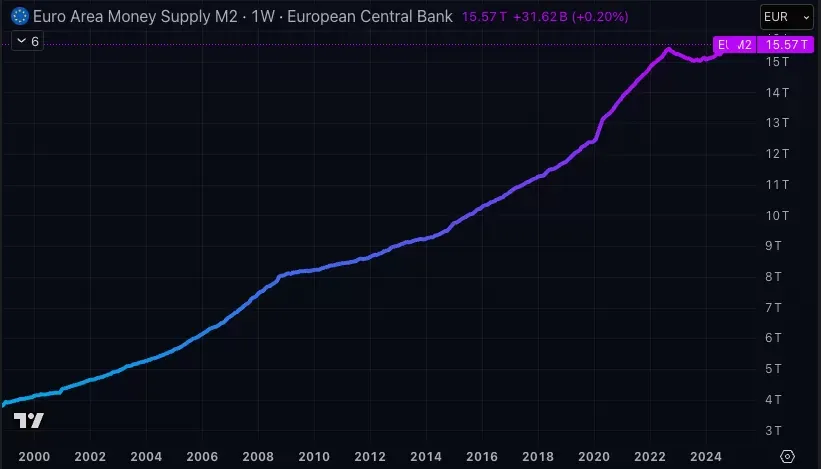
Chart showing the liquid EUR supply in the economy from 2000 to 2025
This isn’t an accident. The system is rigged to quietly erode your wealth through inflation—a hidden tax on everyone. Meanwhile, productivity (think industrial farming) should make things like milk cheaper, not more expensive. Yet prices keep rising. Why? Money printing. So, if you’re not investing, you’re not just standing still—you’re losing ground.
The Theft of Inflation: A Wake-Up Call
Let’s dig deeper into this “theft” idea—it’s not as dramatic as it sounds, but it’s real. Take the U.S. dollar: in 1980, there was $600 billion in circulation; now it’s $21 trillion. Since the COVID crisis alone, the U.S. printed nearly 80% more dollars to prop up the economy. Euros, pounds—every major currency does this. These are “fiat” currencies, meaning their value rests on trust in governments, not something tangible like gold. When trust wavers (think Zimbabwe or Venezuela), they can collapse.
What does this mean for you? If you stash 1,000 euros under your mattress today, in ten years, it might only buy 500 euros’ worth of groceries. Inflation averages around 2% officially, but real-world costs—like rent or food—often rise faster. I’d argue you’re losing closer to 10% a year when you factor in money printing and taxes on any gains. Leave your money idle, and it’s like throwing half your life’s effort out the window every decade.
Investing: Your Shield Against the Half-Life of Money
So how do you protect your hard-earned cash? Investing. It’s not about getting rich quick—it’s about making your money grow faster than inflation eats it away. The goal? Aim for at least a 10% annual return. That beats the “half-life” and keeps your purchasing power intact—or even growing.
Here’s where the magic happens: compound interest. It’s like planting a seed that grows into a tree and then drops more seeds. Say you invest 100 euros at 10% a year. After one year, you’ve got 110 euros. In year two, that 110 earns 10%, so you’re at 121 euros. Over 10 years, it’s 259 euros; in 20 years, it’s 672 euros—all from one initial 100-euro investment. Add 100 euros yearly, and in 40 years, you’re looking at over 48,000 euros. That’s your money working for you, not the other way around.
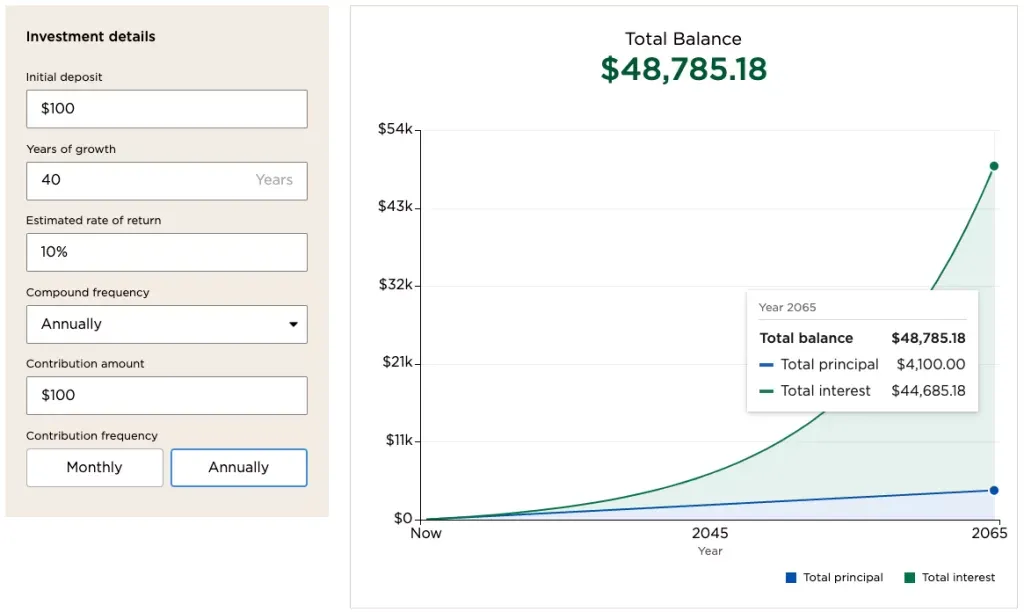
https://www.nerdwallet.com/calculator/compound-interest-calculator
Compare that to a bank savings account offering 0.5%. After 10 years, your 100 euros becomes 105 euros—nowhere near enough to keep up with inflation. Worse, if you earn interest or profit, you’ll pay taxes (in France, 30% on capital gains). So, you need that 10% target to truly stay ahead.
Where to Put Your Money: Safe Bets for Beginners
Now, let’s talk options. Investing means giving your money to someone else—a company, a government, a fund—who uses it and pays you back with a return. Riskier bets offer higher rewards; safer ones, less. Here’s a rundown of what’s out there, tailored for beginners like you:
Stock Market Trackers (ETFs)
- What: Exchange-traded funds (ETFs) are baskets of stocks—like the top 500 U.S. companies (S&P 500) or global markets (world ETFs). You’re not betting on one company but the average of many.
- Returns: The S&P 500 has averaged 10-12% annually over decades, tripling in value from 2015-2025 (200+% growth). Tech stocks (Nasdaq 100) soared 400+% in the same period.
- Risk: Low-to-moderate. Crashes happen (like COVID’s 30% drop), but over time, markets recover and grow, fueled by productivity and money printing.
- Why It Works: Diversification lowers risk, and long-term trends are your friend. Time in the market beats timing the market.
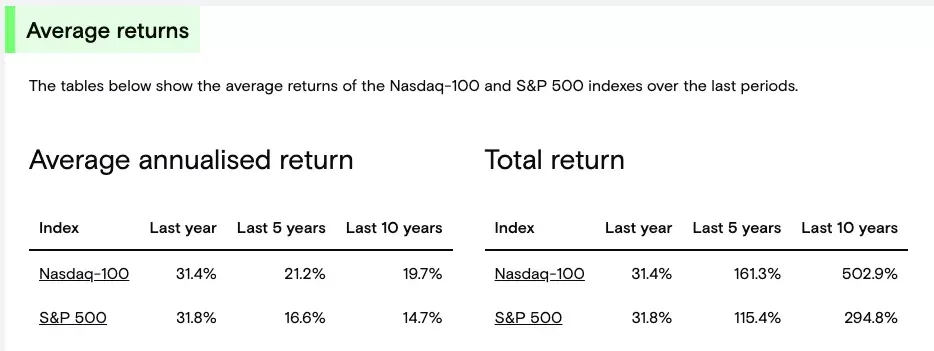
https://curvo.eu/backtest/en/compare-indexes/nasdaq-100-vs-sp-500?currency=eur
Bonds
- What: Loans to governments or companies promising steady interest (e.g., 1-4% yearly).
- Returns: Dismal lately—U.S. bonds returned 15% over 10 years; UK bonds, 8%. You’re losing to inflation.
- Risk: Low, unless the issuer goes bust (rare for big governments).
- Why Skip It: Historically “safe,” bonds don’t cut it anymore. Inflation outpaces their returns.
Real Estate
- What: Buying property to live in, rent out, or sell later.
- Returns: Are volatile and illiquid. My UK house made me £100,000 in three years; a French one lost me €80,000 over ten.
- Risk: High—market swings, maintenance costs, and you can’t cash out fast.
- Why Be Cautious: Great if you live in it or have the expertise, but as an investment, it’s risky and attracts a wide range of taxes and other charges.
Gold
- What: A classic “safe haven” asset you can hold physically or via trackers.
- Returns: Up 140% from 2015-2025, but flat for years before that.
- Risk: Moderate—tied to supply (1.5% new gold yearly) vs. money printing.
- Why It’s Okay: Beats inflation slightly, but no exponential growth like stocks.
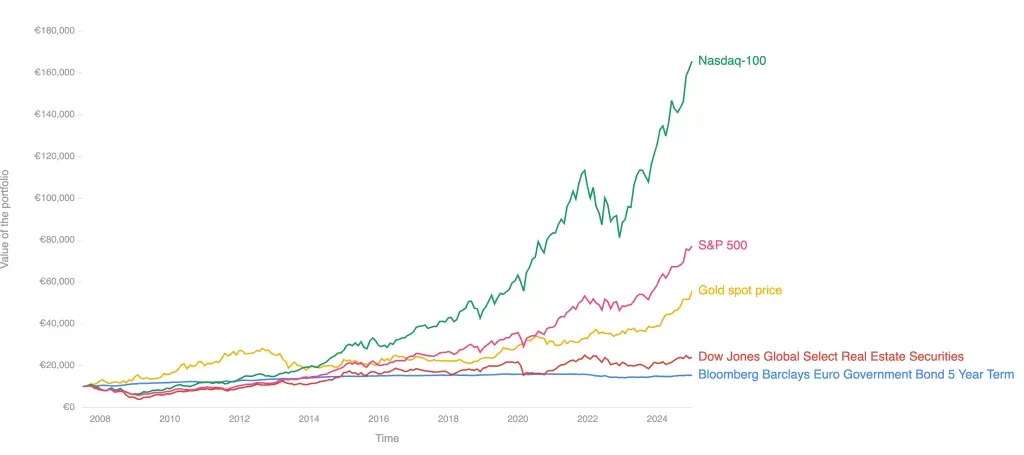
Bitcoin (A Wild Card)
- What: Digital “gold” with a capped supply (21 million coins), not controlled by any governments or corporations.
- Returns: 20,000% from 2015-2025—insane, but volatile (80% drops happen).
- Risk: High over short term. I’ve made and lost big here but longer term (4+ years) can drive significant gains.
- Why Tread Lightly: Put in only what you can lose. It’s a hedge against money printing, but not for the faint-hearted.
How to Start Investing Today
Convinced yet? Here’s how you, can dip your toes in:
- Open a Brokerage Account
- Globally, Interactive Brokers offers cheap fees and access to everything they are my preferred broker. In France, try Boursorama or Bourse Direct (low fees, PEA tax benefits if you hold 5+ years). (I use both).
- Transfer a small amount—100 euros, 300 euros, whatever you want to start with.
- Pick a Tracker
- S&P 500 ETF: Steady 10%+ returns, U.S.-focused.
- World ETF (e.g., Vanguard): 150% growth in 10 years, diversified globally.
- Nasdaq 100 ETF: Tech-heavy, 400% in a decade.
- Buy through your broker (e.g., Amundi’s PUST for Nasdaq in France, €84/share).
- Research the right ETF for you
- Set It and Forget It
- Add small amounts whenever you can as this compounds to big numbers over decades.
- Hold long-term. Don’t panic if it dips.
- Dream Big, Start Small
- Want €50,000 yearly income without working? At 10% returns, you’d need €500,000 invested. Start with €1,000, add €1000 yearly, and in 40 years, you’re at €487,000. Earn more as your career advances, invest more, and it’s millions. Time is your superpower.
Final Thoughts: Your Time Is Now
You don’t need a fortune to start investing—just time and a little courage. Every euro you tuck away today could grow into hundreds or thousands down the road, shielding your life’s energy from inflation’s slow theft. My advice? Start with a cheap, diversified ETF (S&P 500 or world stocks), hold it for decades, and let compound interest do the heavy lifting. Skip the savings accounts and bonds—they’re losing bets. And if you’re feeling bold, mix in a small % of Bitcoin to spice things up—just don’t bet the farm.
When I started, I put £400 into Tesla stock. Today, after 10 years of investing, I’ve got enough invested that I have peace of mind about my future—priceless. Start now, and your future selves will thank you.