A Guide to Start Investing and Protect Your Future
Starting to invest: $100 a month at 7% grows to about $121,000 in 30 years, with a 90-day plan drawn from 18 years of investing wins and losses.

In 2012, I bought 3 Bitcoin for $50 and sold them for $500, thinking I was a genius after a 900% gain. Today, that same Bitcoin would be worth over $300,000.
That painful lesson taught me something – most people don’t fail at investing because they lose money. They fail because they never actually start, or they don’t stay in for the long run.
After 18 years of wins, losses, and thousands of hours of research, I’ve built something I wish I’d had when I started: a complete system for taking control of your financial future. This guide will show you exactly how to begin investing, and I’ll introduce you to a free tool (convergent.finance) I’ve just launched to make it all manageable.
What’s Inside This Guide
- Why You’re Not Investing (And Why That’s Costing You)
- The Hidden Forces Eating Your Money
- Your Investment Options Explained Simply
- The 90-Day Action Plan
- Introducing Convergent Finance
- Start Today
Quick Win Calculator
$100 invested monthly at 7% return = $121,000 in 30 years
- Time to set up: 15 minutes
- Knowledge required: Just this article
- Cost to wait another year: ~$8,000 in lost compound growth
My Investment Journey: From Mistakes to Financial Independence
In 2007, my career started, and for the next ten years, I did what most people do – contributed to a pension, joined the company share scheme, bought a rental property. I dabbled with a few hundred dollars here and there, more for fun than strategy.
Those early investments taught me my first crucial lesson: small thinking leads to small returns. I was playing with pocket change when I should have been playing to win my financial freedom.
The real wake-up call came in 2017 when I took a job in Dubai. Suddenly, I had no tax but also no safety net – no pension contributions, no social security, nothing. It forced me to take control of my financial destiny. That decision changed everything.
Since then, I’ve:
- Learned from costly mistakes (like panic selling during COVID)
- Spent thousands of hours researching investment strategies
- Developed my own system for tracking and optimising wealth
Now, friends and family regularly ask me for investment advice. After explaining the same principles dozens of times, I realised I needed to document everything properly. But more importantly, I needed to solve a problem I kept facing…
The nightmare of tracking investments across multiple platforms, countries, and currencies.
That’s why I spent the last 18 months building Convergent Finance – but more on that later. First, let’s address why you might not be investing yet.
❌ Why You’re Not Investing (And Why Each Excuse Costs You Money)
“I can’t afford to invest”
The truth: You can’t afford NOT to invest. Here’s what actually happens:
- If you’re 25 and delay investing just 5 years, you’ll need to work an extra 7-10 years before retirement
- Every $1,000 sitting in your bank account loses $30-50 in purchasing power annually
- The average retiree needs $280,000 saved – without investing, that means saving $7,000/year for 40 years
“Investing is too risky”
The truth: NOT investing is guaranteed loss. The actual numbers:
- Savings account: 0.5% interest – 3% inflation = -2.5% guaranteed annual loss
- Broad ETF index funds: 7-10% average returns over 30+ years
- Even with market crashes, patient investors always come out ahead
I’ve been through the 2008 banking crisis, COVID, and countless “end of the world” predictions. My portfolio dropped 30% in March 2020. You know what I did? Nothing. By March 2021, I was up 10%.
“I don’t understand investing”
The truth: You don’t need to be Warren Buffett. You need to understand three things:
- Buy assets that grow over time
- Don’t panic when they temporarily drop
- Keep buying regularly
That’s it. Everything else is optimization.
“I don’t know where to start”
The truth: This is the only valid excuse. Now I’m giving you the exact blueprint, and I’ve built a free tool to help you learn and track your progress.
🔥 The Hidden Forces Eating Your Money
The Magic of Compound Interest (Working For You)
Einstein supposedly called compound interest ‘the eighth wonder of the world’ (though he probably didn’t actually say that). Here’s why:
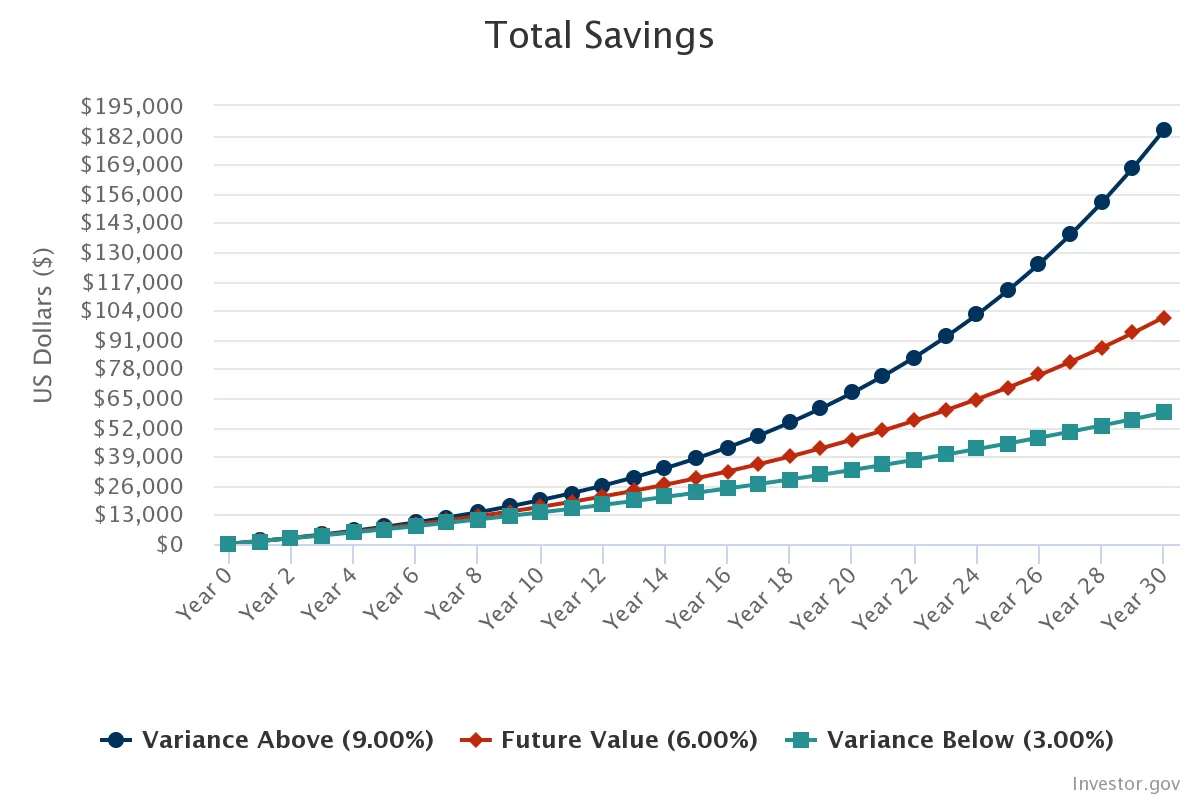
I ran a simple calculation: $100 initial investment, adding $100 monthly:
- At 3% (poor performance): $58,000 after 30 years
- At 6% (balanced portfolio): $100,000 after 30 years
- At 9% (stock market average): $183,000 after 30 years
The difference between starting now versus waiting 5 years? About $50,000. That’s a Car, a house down payment, or two years of financial freedom.
This is exactly why I built a compound interest calculator into Convergent Finance – so you can play with your own numbers and see your potential future wealth in real-time.
The Silent Thief: Inflation and Money Printing
Here’s what’s really happening: Your government is basically taxing you through inflation. Look at this chart from the USA but this story is the same for every country (UK, EUR, JPY):
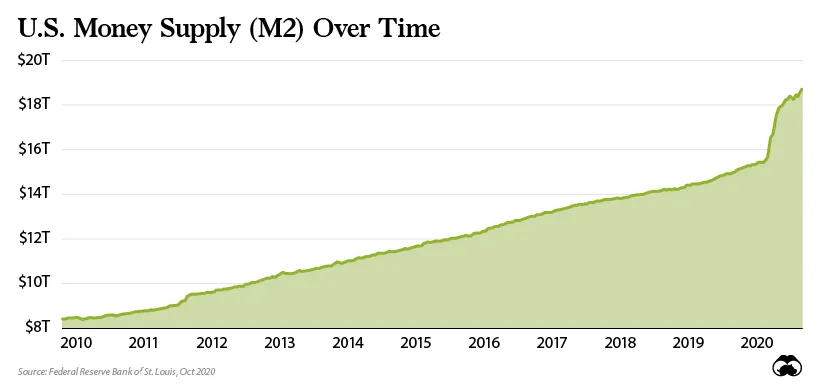
Since 2020 alone, the US has printed 40% of all dollars ever created. FORTY PERCENT. It’s not that things are getting more expensive – your money is becoming worth less.
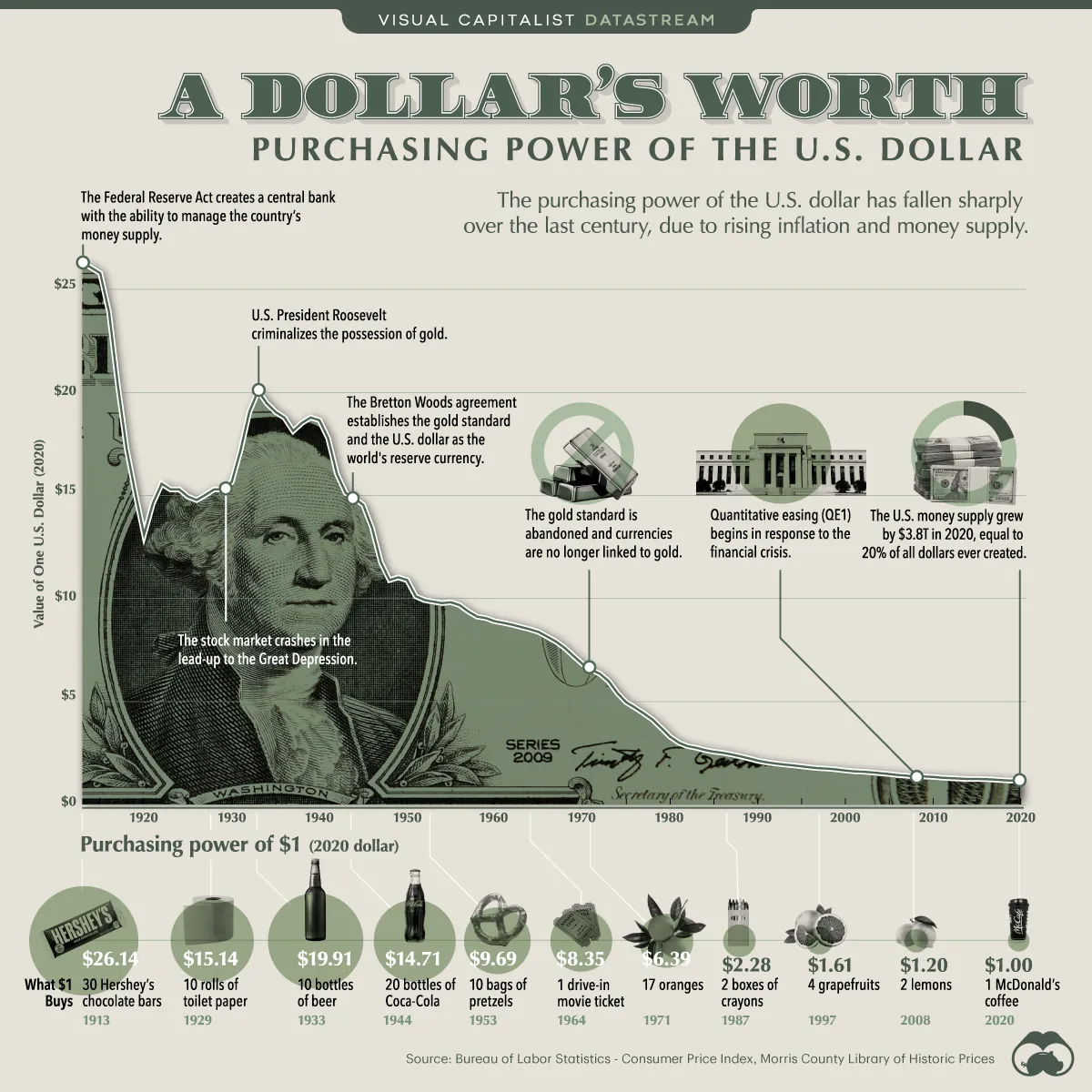
A dollar from 1970 is worth 15 cents today. If you’re keeping money in a savings account, you’re basically lighting it on fire in slow motion.
Your Investment Options (Ranked by Difficulty and Return)
Let me break down every major investment option:
First Priority: Pay off any High-Interest Debt
Difficulty: ⭐ | Return: Guaranteed 15-25%
Not sexy, but critical. Credit card debt at 20% interest? Paying it off is a guaranteed 20% return. No investment beats that.
Action: List all debts above 5% interest. Kill them first.
Invest in Yourself
Difficulty: ⭐⭐ | Return: Unlimited
The best investment I ever made? Books on investing and leadership. Return: Financial freedom, my own company and enjoying my work.
Smart investments:
- Practical skills (coding, design, sales)
- Professional appearance (doesn’t need to be expensive)
- Network building (conferences, meetups)
- Your own website/personal brand
Avoid: Expensive degrees unless directly required for your career path
Stocks and ETFs (My Primary Vehicle: 60% of Portfolio)
Difficulty: ⭐⭐ | Expected Return: 7-10% annually
This is where most of your money should go once you’re started. My evolution:
- 2010-2016: Random Stock picking (stressful, mediocre returns)
- 2017-2020: 60/40 World Stock Index ETF (VWRL) and Government Bonds ETF
- 2021-Present: An Actively Managed Portfolio of Stocks, Options, ETFs
The lesson that cost me thousands: Boring investments beat ‘brilliant’ ones every time. My “exciting” picks normally underperformed basic index funds and “overtrading” reduced my returns.
In Convergent Finance, I’ve included an AI stock and ETF advisor that will analyze any stock / ETF in minutes – something that used to take me hours of research.
Real Estate (Currently 0%)
Difficulty: ⭐⭐⭐⭐ | Return: 5-15% with leverage
I’ve owned two properties. Sold them both. Here’s why:
The good:
- Leverage is incredible (borrow money with mortgage at 3%, property price increases at 6% = you win)
- Forced savings through mortgage payments
- A house you can live in and make your own
What I learned:
- Illiquid (took me 12 months to sell one property)
- Hidden costs everywhere (maintenance, taxes, insurance)
- Location dependent (requires deep local knowledge and quite a lot of luck)
- Stressful tenant management if you are running a rental property
Only invest if: You’re staying put for 8+ years and can get a mortgage under 4%
Savings Accounts
Difficulty: ⭐ | Return: 0-3%
Your emergency fund goes here. Period. I keep 6 months of expenses in quick access savings.
The truth: These lose to inflation. They’re insurance, not investments.
Cryptocurrency
Difficulty: ⭐⭐⭐ | Return: -100% to +10,000%
My crypto journey is a masterclass in mistakes:
- 2012-2016: Made 900% Bought 3 Bitcoin for $50, sold at $500 (😭)
- 2021: Bought the Post-Covid Peak
- 2022: Lost 80% of my value
- Today: Rode the market up to the current all time highs
My rules:
- Never invest more than you can lose entirely
- Stick to the safer assets Bitcoin/ETH/Solana for 90%+
- Use reputable exchanges (I use Binance and Coinbase)
- Take Security seriously and get a hardware wallet
Tracking crypto across multiple exchanges was a nightmare – another reason I built unified tracking into Convergent Finance.
Startups and Alternative Investments
Difficulty: ⭐⭐⭐⭐⭐ | Return: Usually 0
80% of startups fail. The 20% that succeed rarely give small investors good returns. I keep this to less than 5% for fun, learning and to support some companies and founders I like.
🎯 Your 90-Day Action Plan: From Zero to Invested
Days 1-7: Foundation Week
Day 1-2: Calculate Your Starting Point
- Go to Convergent Finance (it’s free): Convergent Finance
- Input your current financial situation
- List all assets and debts
- Calculate monthly expenses
- Determine your “sleep well” emergency fund (3-6 months expenses)

Day 3-4: Set Up Your Tools
- Open a Revolut account for easy management of your accounts and initial investing: Start with Revolut
Day 5-7: Education Sprint
- Read The Psychology of Money and Die with Zero
- Go and try TradingView for research: Get TradingView
- Join an investing community (Invest Answers)
Days 8-30: Learning Month
Week 2: Understand the Basics
- Use Convergent Finance’s AI to research 5 different ETFs
- Watch one YouTube video daily on investing basics
Week 3: Design Your Portfolio
- Decide your allocation (Cash, Stocks & ETFs, Pensions, Real-Estate)
- Research specific ETFs for each category
- Use Convergent Finance to review your current situation vs retirement goals
Week 4: Prepare to Deploy
- Set up automatic transfers to investment accounts
- Clear any high-interest debt
- Tell someone your plan (accountability matters)
Days 31-60: Action Month
Week 5-6: Start Small
- Invest your first $100 in a broad market ETF via Revolut
- Set up $50-100 monthly automatic investment
- Track everything in Convergent Finance
Week 7-8: Build Confidence
- Make your second investment (different ETF or asset class)
- Start researching individual stocks in industries you understand
- Use Convergent Finance’s AI to analyze your choices
Days 61-90: Level Up
Week 9-10: Graduate to Professional Tools
- Open an Interactive Brokers account: Join Interactive Brokers
- Transfer some investments from Revolut
- Connect TradingView to Interactive Brokers
Week 11-12: Optimize and Automate
- Review your portfolio performance in Convergent Finance
- Adjust allocations based on AI recommendations
- Increase monthly investment amount
- Set calendar reminders for quarterly reviews
Introducing Convergent Finance: Your Financial Command Center
Halfway through writing this guide, I realized I was about to recommend 5 different apps, 3 spreadsheets, and hours of manual tracking. That’s exactly the problem I’ve spent 18 months solving.
The Problem It Solves
I was drowning in financial complexity:
- Stocks in Interactive Brokers
- Crypto across 3 exchanges
- Properties in different countries
- Pension accounts I couldn’t even access
- No idea of my true net worth
- Hours monthly just to understand my position
Sound familiar?
What I Built
Convergent Finance is the tool I wished existed when I started investing. It’s not another trading app or robo-advisor – it’s your complete financial overview.
Core Features:
Unified Dashboard
- See everything in one place (stocks, crypto, property, even art)
- Multi-currency support (I manage USD, EUR, and GBP)
- Real-time net worth tracking
- Dashboards that actually make sense
AI-Powered Intelligence
- Get quality research on any stock or ETF
- Personalized insights based on YOUR portfolio, not generic advice
- Fast market analysis that used to take me hours
Portfolio Optimization
- See your true asset allocation across all accounts
- Identify concentration risks
- Get rebalancing suggestions
- Track performance against benchmarks
Expense Tracking
- Understand where your money goes
- Identify how much you can invest
- Set and track financial goals
- See the impact of spending on long-term wealth
Why It’s Different
I use this every single day for my own portfolio. Every feature exists because I needed it. No bloat, no useless features, just what actually matters.
Completely Free
I want to build the best product first. Early users are helping shape the future of this personal finance tool.
Privacy First
Your data stays yours. No selling to advertisers. No sketchy third parties. Just you and your financial future.
Join the Beta
Here’s the deal: Convergent Finance is brand new. I’ve just opened it to the public, and I need your help to make it better.
What you get:
- Completely free access to all features
- Direct input on new features
- My personal support (yes, I answer every email)
- The satisfaction of shaping a tool that could help lots of others
What I need from you:
- Use it regularly
- Tell me what’s broken
- Share what features you need
- Be patient with early bugs
Start Free with Convergent Finance →
Start Today: Your Future Self Is Counting on You
Here’s what matters: Every day you wait to start investing costs you money. Not just from inflation eating your savings, but from missed compound growth.
One year of delay at age 25 = working an extra 2-3 years before retirement.
The good news: Starting is easier than ever. You don’t need to be rich. You don’t need a finance degree. You just need to begin.
So here’s my challenge:
Start today. Use Convergent Finance to track your journey. Send me your wins, your questions, your struggles. I read every message personally.
And if Convergent Finance helps you – even a little – share it with one person who needs it.
Your future self will thank you. I promise.
📬 Stay Connected
Want to keep learning about investing and see what I’m building with Convergent Finance?
- Subscribe to my newsletter: charleshaworth.substack.com
- Follow me on my socials: LinkedIn, X
- Follow my YouTube channel: https://www.youtube.com/@CharlesHaworth
Found this helpful? Share it with someone who needs to read it.
Disclaimer: I am not a financial advisor, and nothing in this article should be considered financial advice. These are simply my experiences and opinions from 18 years of investing. Always do your own research and consider consulting with a qualified financial advisor before making investment decisions. Some links in this article are affiliate links, which means I may receive a small commission if you sign up through them – this helps support my work but doesn’t cost you anything extra. Convergent Finance is my own product that I’m actively developing based on user feedback.