Solarise the wind farms. Keep the grid connection.
Adding solar to suitable wind farms can get more electricity through the same grid connection without raising the peak export limit.

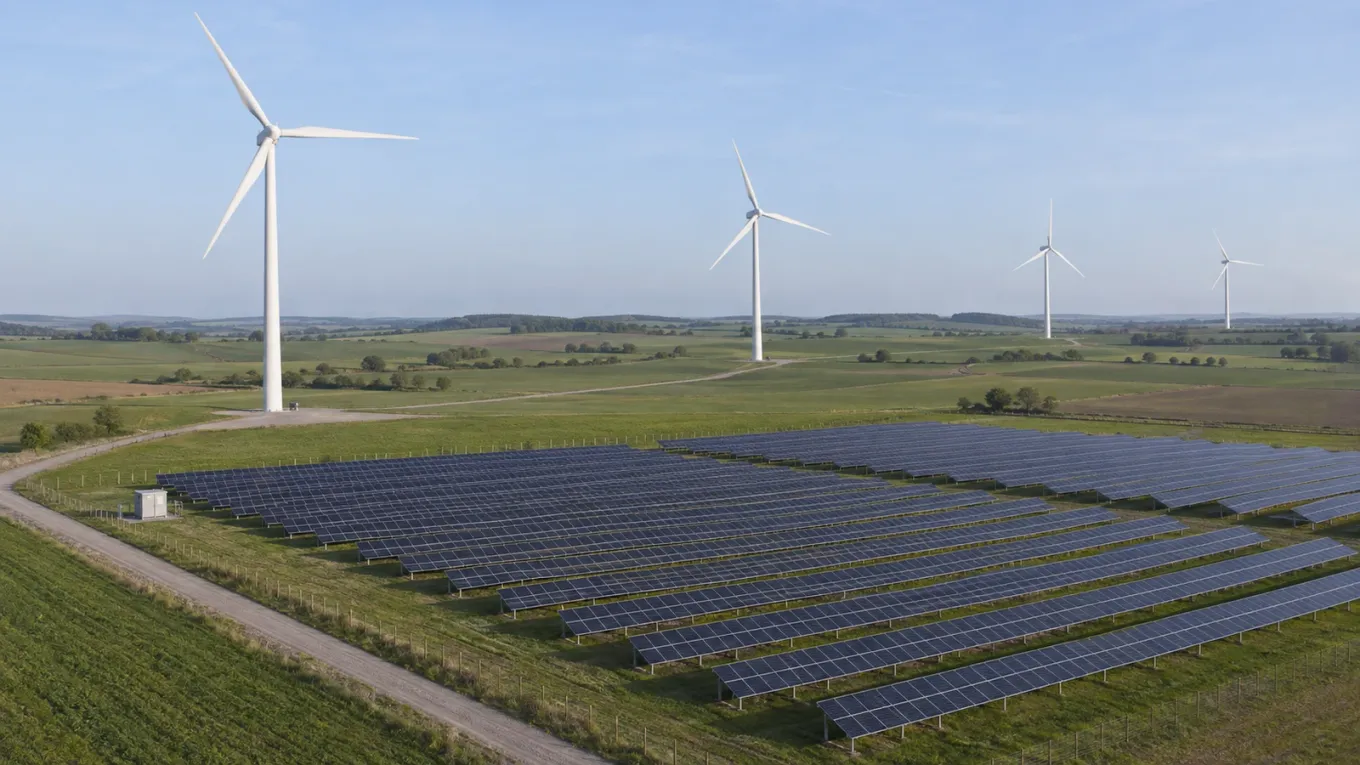
When we model a wind project, I want to see how much of its grid connection sits idle, and in which hours. If there’s room to put solar on the same site, that second question is key.
IRENA’s roadmap for transitioning away from fossil fuels argues for more grid investment as economies electrify. I agree. IRENA also points to 2,500 GW of wind and solar capacity awaiting grid connection. But alongside building new grid, I think we should be asking what the connections we’ve already built could carry if we used them better.
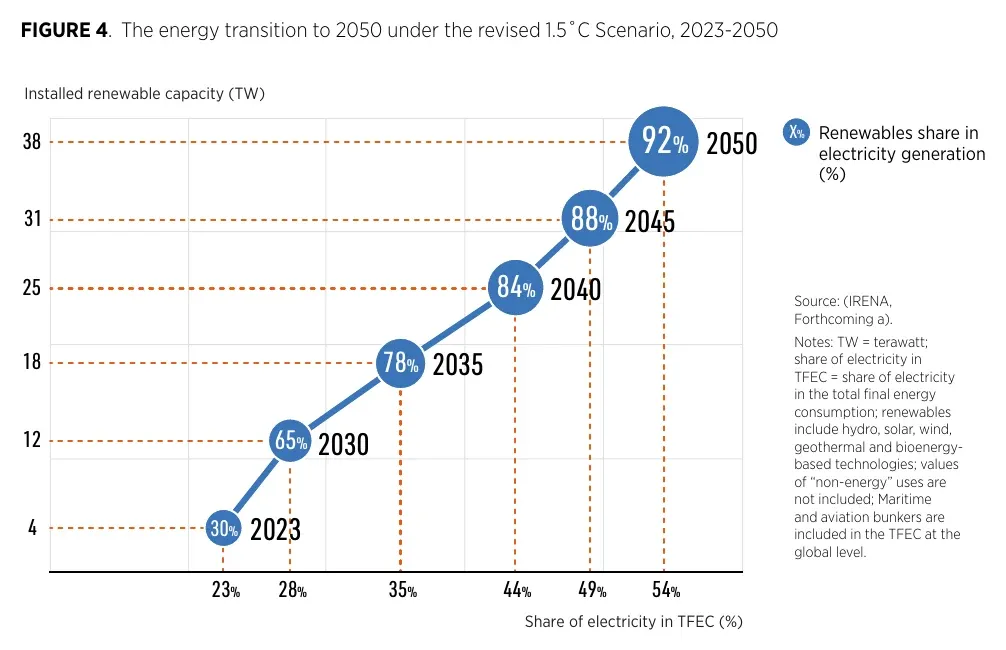
Source: © IRENA (2026), Transitioning away from fossil fuels, Figure 4, p. 21. Reproduced under the report’s reuse terms.
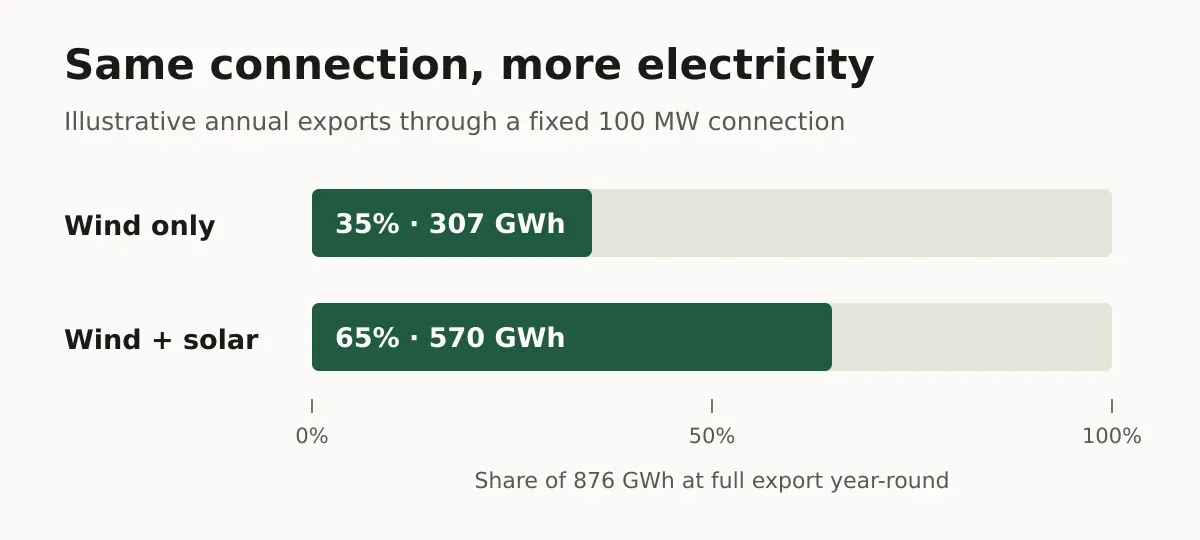
One place I’d start is existing onshore wind. Solarise the suitable projects: add solar behind their existing export limits and run wind and solar as one plant. On the right site, that could take connection utilisation from 35% to 65% or more without increasing the grid infrastucture.
Solarizing wind
Suppose you have a 100 MW wind farm with a 100 MW export limit. In an illustrative year, it exports about 307 GWh. Divide that by the energy the connection could carry if it exported at full power all year, about 876 GWh, and you get 35%. In this example the wind farm’s capacity factor and the connection’s utilisation are the same because the turbine nameplate and the export limit are the same and we’re using net exported wind energy.
Now add solar. Say 150 MW of solar at a 22% capacity factor generates about 289 GWh before any clipping at the shared connection. If 26 GWh of that output cannot be exported because it overlaps with wind or exceeds the limit, that leaves about 263 GWh of extra exports. Total exports are then about 570 GWh, or 65% of the same connection’s annual capacity. The site still exports no more than 100 MW at any instant.
That’s nearly twice the annual energy through the same connection, not twice the peak power.
The answer is in the hours
Wind and solar don’t have to be perfect opposites. Solar only needs enough hours in which it produces and wind isn’t filling the connection. On most sites wind is stronger overnight or in a different season due to the natural drivers of the wind being changing temperatures. Two sites with identical annual resource figures can give very different results.
That’s why I wouldn’t start with a rule about how many megawatts of solar to add. With https://converge-hybrid.com we put wind and solar together, apply the export limit in every hour, then price the electricity the site can actually sell and run hundreds or thousands of 30 year simulations to test how much extra solar can be added while still maximising the financial returns and lowering the LCOE. If a battery can move those surplus megawatt-hours into higher value hours, model it too.
Same export limit still means doing the engineering
At Haringvliet in the Netherlands, Vattenfall runs wind, solar and batteries using shared infrastructure, including the grid connection. That shows the arrangement is real.
You still need land, planning permission, electrical design and the grid operator’s agreement. An existing connection agreement may limit which technologies can use it, and the operator may still require studies or upgrades. The plant must be able to enforce the export limit, and the commercial case has to work after you allow for curtailment, connection charges and what buyers pay at different times of day.
How many sites can do this now?
Examining operating onshore wind sites that have spare daytime export capacity, usable land and a path to grid consent is the starting point.
Indeed, build the new grid we need. But before asking for more grid connections, I’d ask one question of every suitable wind site: how much more electricity can this connection carry?